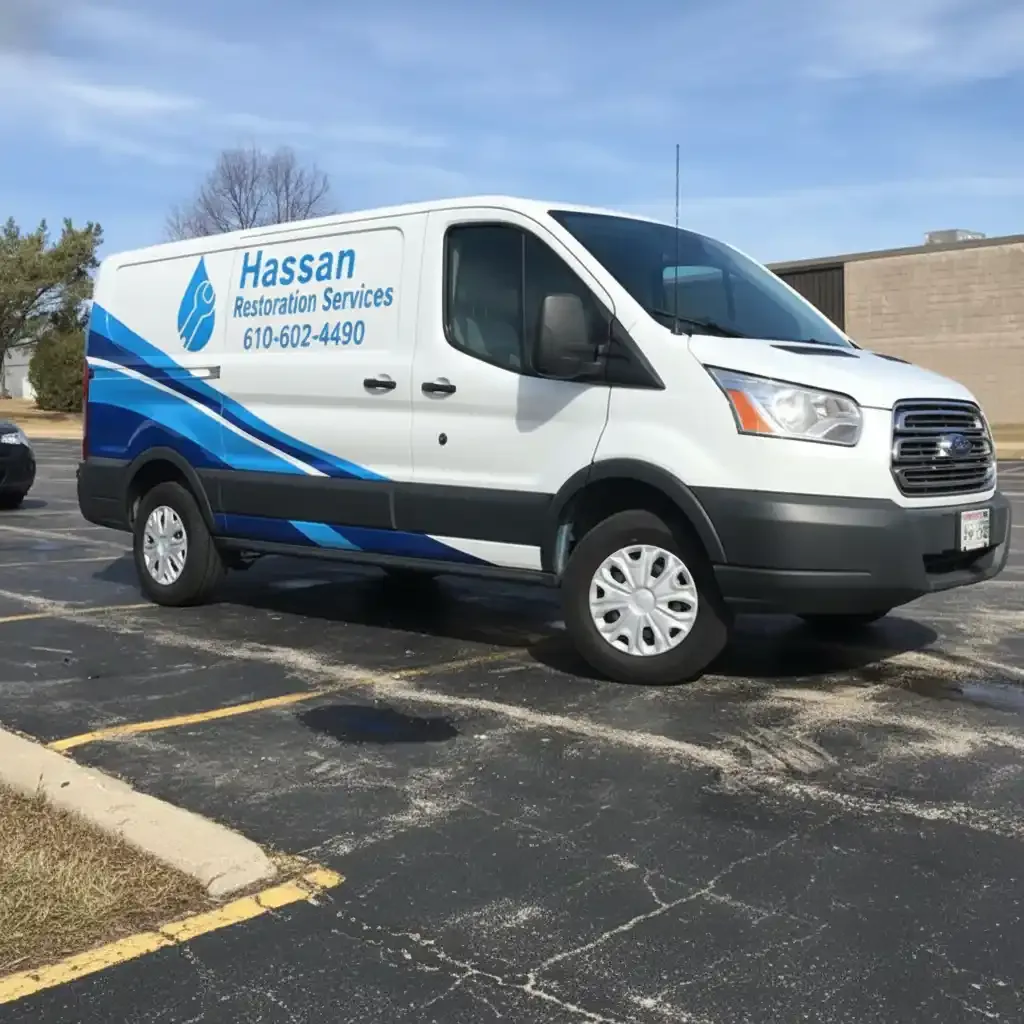
A fire in a Phillipsburg home leaves two problems running at once: the damage the flames caused and the water the suppression left behind. Our crew boards up what is exposed, addresses the suppression water, and runs a smoke survey reaching well past the room that burned. Drenched framing in a area winter starts growing mold fast, which is why we dry while we clean rather than after. The full extent — char, soot travel, and suppression water — is recorded and delivered as one organized packet. Dial 610-602-4490 and we mobilize a area team fast.
- Soot + smoke odor removal
- HVAC decontamination
- Pack-out + content cleaning
- Hydroxyl odor treatment
- Structural rebuild
- Insurance-scope documentation
Why Smoke Reaches Rooms The Fire Never Touched
Even a small kitchen fire can push smoke through an entire floor, coating surfaces rooms away. Different surfaces hold smoke differently — plaster, raw wood, tile, and glass each demand a different cleaning method.
We clean soot by surface type — wet method, dry method, abrasive — because what works on tile fails on raw wood. We photograph each surface before and after cleaning so the soot work is shown, not merely claimed.
Why The Ductwork Matters After A Fire
Real deodorization is a sequence, not a spray — source removal first, then treatment of what remains. We remove the source residue first, then use thermal fogging or hydroxyl treatment to neutralize what is bonded into porous materials.
We make the cleaning-versus-replacement call on the condition of the system, not on what is easiest to bill. Done right, the odor is gone and stays gone — no returning smell once the masking would have faded.
How this fits the bigger recovery
A property loss in Phillipsburg rarely stays in one lane — fire damage restoration often overlaps with flood cleanup, wind damage repair, mold inspection and removal, sewage cleanup, reconstruction, and our crew handles all of it under one contract. We dispatch the same standard to Easton fire damage restoration, Alpha fire damage restoration, Fire Damage Restoration in Lopatcong, Fire Damage Restoration in Pohatcong and everywhere else across County.
If you searched for local emergency restoration, you have reached a local team — call 610-602-4490 any hour. For background, read When a Pipe Bursts in a Phillipsburg Winter: The First-Hour Playbook for Warren County Homes on our blog, or head back to our Phillipsburg home page to see everything we do.